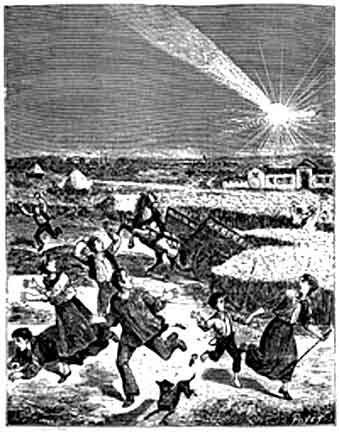
At 6:30 on the morning of December 14, 1807, a blazing fireball about two-thirds the size of the moon was seen traveling southwards by early risers in Vermont and Massachusetts. Three loud explosions were heard over the town of Weston in Fairfield County, Connecticut. Stone fragments fell in at least 6 places.

Weston-meteorite

Several large stones, including one of about 200 pounds (91 kilograms), had been smashed to bits on the rocky ground. Others were smashed by the finders: “Strongly impressed with the idea that these stones contained gold and silver, they subjected them to all the tortures of ancient alchemy, and the goldsmith’s crucible, the forge, and the blacksmith’s anvil, were employed in vain to elicit riches which existed only in the imagination.”


Adapted from “The Peabody Museum Meteorite Collection: A Historic Account” by Barbara L. Narendra. 1978. Discovery 13(1):10–23.

– altered by Hystoria

Posted on by hystoria.ca | Leave a comment

Massachusetts’ Youngest Murderer Of The 1st Degree

12-year-old Jesse Pomeroy Youngest Serial Killer

Jesse H. Pomeroy (November 29, 1859 – September 29, 1932)

“It is generally concluded that the boy is mentally deficient.” – Boston Globe

Young Pomeroy was indeed a bad seed.  His vicious attacks began during his adolescence in the town of Charlestown, Massachusetts. Using  his skills of manipulation, he enticed younger boys around the ages of 7 – 8, to walk with him to isolated areas, (generally Powder House Hill in Chelsea) . Once secluded, he would unleash his fury on his unsuspecting victims; some whom were left physically scarred for life. Between the years of 1871 and 1872, Pomeroy had attacked 7 boys.

The accounts told by his victims varied slightly when giving the police the horrid details. The boys had been stripped, tied up and tortured; beaten with belts, blows from fists and feet. Other boys told how Pomeroy  utilized his knife in the attacks, slashing and poking them with the blade, drawing blood while bound and nude.
It wasn’t long before the police had an idea of whom the culprit was, and they proceeded to arrest the boy of 12.  He was later sentenced to the West Borough Reform School where he was to be held until the age of 21. Pomeroy served just 2 years of his 9 year sentence, as it was thought by the system that he had been reformed due to his good behaviour.

Now in the slums of South Boston, where the 14 year old lad and his sibling had moved with their mother Ruth, new territory was scoped and new victims were hunted.

JessPomeroyOldMan

“Jailbird Jesse Pomeroy” – Courtesy of the Boston Public Library, Leslie Jones Collection.

In March of 1874, 10 year old Mary Curran had disappeared. A month later 4 year old Horace Millen was taken by Pomeroy to marshland outside of town. Horace had been slashed repeatedly with a knife. It has been reported that when police located the body of the boy, his head was close to being fully decapitated. The body of Katie Curran was found later, in the basement of Pomeroy’s mother’s dress shop. Her remains were hastily and carelessly concealed in an ash heap.

Police  quickly saw Pomeroy as a potential suspect and placed the known “child torturer” at the top of their list. Pomeroy was taken to visit the body of Horace Millen where he was then asked if he had committed the murder and was denied the right of counsel.

Pomeroy was pronounced guilty on December 10, 1874 and was sentenced to death – a very harsh punishment for someone of such a young age. After 3 attempts by Governor Gaston, who refused to sign the death warrant, Pomeroy’s sentence was commuted to life in prison in solitary confinement at Charlestown State Prison.

While serving his sentence, Pomeroy spoke of how he taught himself other languages such as German, which a visiting psychiatrist had found he learned with  “considerable accuracy”.  Pomeroy wrote poetry and read law books. The law books taught Pomeroy how to fight for his rights in prison and he often demanded his poetry be published. His persistence didn’t stop there.

After his death, it was told that Pomeroy had made at least a dozen attempts to escape. Wardens would find tools such as rope, steel pens and a drill, which would be found on Pomeroy’s person or in his cell. He also lost an eye after attempting to destroy the side of his cell by redirecting a gas pipe. A 1914 psychiatric report claimed that Pomeroy had shown the “greatest ingenuity and a persistence” which is unprecedented in the history of the prison.

It was in 1917 that Pomeroy’s sentence was again commuted to the extent of allowing him the privileges afforded to other life prisoners. At first he resisted with the same stubbornness he displayed as a child; disliking rules and authority and wanting nothing else but a pardon. Eventually Pomeroy would break down and adjust to his new circumstances. He joined in other activities – even appearing in a prison minstrel show.  In 1929, now an old, frail man, Pomeroy was transferred to Bridgewater Hospital for the Criminally Insane, where he died 3 years later on September 29, 1932.

– altered by Hystoria


Posted in Children, Crime & Punishment | Tagged , , , , , , , , | Leave a comment

Our Fancy – Peeping Tom: Your Neighborhood Spaceman

Do enjoy this short animation.

Music – Peeping Tom – Your Neighborhood Spaceman
Animation – Les Marche des Sans-Nom

– altered by Hystoria


Posted in Our Fancies | Tagged , , , , , , , | Leave a comment

The Witch of New Dundee

303dce7d6701e82232198d08b25105b8About the year 1800, an old woman said to be a witch lived in New Dundee, northwest of Roseville, Ontario. It was said she possessed a copy of The Sixth and Seventh Books of Moses and that she would use its magic  to transform herself into an animal of her choice.

Editions Six through Ten were circulated throughout Waterloo County amongst the farmers. The mythical collection of “charm books” consisted of sigils (seals) and spells to be utilized “for the good of Mankind.


The idea of therianthropes living amongst us is said to have has been part of human culture  since around 13,000 BC.  Henri Breuil,  insisted a cave painting of which he made a sketch, was in fact a sorcerer, magician or shaman performing a ritualistic act.

– altered by Hystoria

Pintura_Trois_Freres

“Pintura Trois Freres” By Clottes, Jy Lewis – Williams

Posted in Mythology | Tagged , , , , , , , , , , , , , , , , , , , , , , , , , , , | Leave a comment

A Vision Of Twilight – by Archibald Lampman

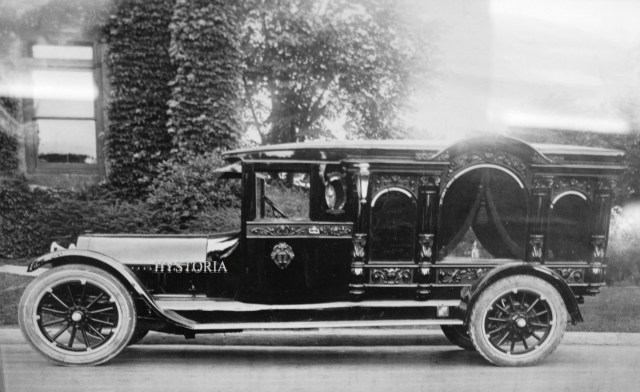
hearse_TruscottDwyer_Hamilton Ontario

By a void and soundless river
On the outer edge of space,
Where the body comes not ever,
But the absent dream hath place,
Stands a city, tall and quiet,
And its air is sweet and dim;
Never sound of grief or riot
Makes it mad, or makes it grim.

And the tender skies thereover
Neither sun, nor star, behold–
Only dusk it hath for cover,–
But a glamour soft with gold,
Through a mist of dreamier essence
Than the dew of twilight, smiles
On strange shafts and domes and crescents,
Lifting into eerie piles.

In its courts and hallowed places
Dreams of distant worlds arise,
Shadows of transfigured faces,
Glimpses of immortal eyes,
Echoes of serenest pleasure,
Notes of perfect speech that fall,
Through an air of endless leisure,
Marvellously musical.

And I wander there at even,
Sometimes when my heart is clear,
When a wider round of heaven
And a vaster world are near,
When from many a shadow steeple
Sounds of dreamy bells begin,
And I love the gentle people
That my spirit finds therein.

Men of a diviner making
Than the sons of pride and strife,
Quick with love and pity, breaking
From a knowledge old as life;
Women of a spiritual rareness,
Whom old passion and old woe
Moulded to a slenderer fairness
Than the dearest shapes we know.

In its domed and towered centre
Lies a garden wide and fair,
Open for the soul to enter,
And the watchful townsmen there
Greet the stranger gloomed and fretting
From this world of stormy hands,
With a look that deals forgetting
And a touch that understands.

For they see with power, not borrowed
From a record taught or told,
But they loved and laughed and sorrowed
In a thousand worlds of old;
Now they rest and dream for ever,
And with hearts serene and whole
See the struggle, the old fever,
Clear as on a painted scroll.

Wandering by that grey and solemn
Water, with its ghostly quays–
Vistas of vast arch and column,
Shadowed by unearthly trees–
Biddings of sweet power compel me,
And I go with bated breath,
Listening to the tales they tell me,
Parables of Life and Death.

In a tongue that once was spoken,
Ere the world was cooled by Time,
When the spirit flowed unbroken
Through the flesh, and the Sublime
Made the eyes of men far-seeing,
And their souls as pure as rain,
They declare the ends of being,
And the sacred need of pain.

For they know the sweetest reasons
For the products most malign–
They can tell the paths and seasons
Of the farthest suns that shine.
How the moth-wing’s iridescence
By an inward plan was wrought,
And they read me curious lessons
In the secret ways of thought.

When day turns, and over heaven
To the balmy western verge
Sail the victor fleets of even,
And the pilot stars emerge,
Then my city rounds and rises,
Like a vapour formed afar,
And its sudden girth surprises,
And its shadowy gates unbar.

Dreamy crowds are moving yonder
In a faint and phantom blue;
Through the dusk I lean, and wonder
If their winsome shapes are true;
But in veiling indecision
Come my questions back again–
Which is real? The fleeting vision?
Or the fleeting world of men?

Archibald Lampman (17 November 1861 – 10 February 1899)

– altered by Hystoria

Posted in Literature | Tagged , , , , , , , , , , , , , , , , | 1 Comment
pompei

Guide Pompei Official Tour Guides – http://www.guidepompei.com

The ‘curse of Pompeii’ is a story which tells us Mount Vesuvius’ eruption was the act of  Gods unleashing punishment after the Legionaries  destroyed holy buildings.

Back in October, (2015) we learned Massimo Osanna, the archaeological superintendent of Pompeii, had revealed that over a hundred people have returned relics that they stole when they visited the ancient Roman town, claiming they are cursed.

A man wrote from Latin America saying that he and his entire family had experienced “trauma after trauma” after he took a piece of stone from Pompeii.

One Canadian woman who had taken away a decorative terracotta tile while on her honeymoon during the 70’s wrote asking for forgiveness for “an error she made in her youth”.

“At a certain point, people started believing in this story again,” said Mr Osanna. “Even proper thieves have returned things to us.”

The story also added a more reasonable explanation – for the sceptics. ‘However, some plunderers are afflicted by guilt, rather than an ancient curse.’

But how many stinky fingers were skeptics before stealing the artifacts and are now believers?

Perhaps the man from Latin America hadn’t experienced many life traumas until later in life and the timing is just coincidental. We all have to experience trauma from time to time – life isn’t perfect and we can’t learn life lessons without them.

When we question the conscience of the stinky fingered thieves, we must also ask if they had a conscience when first taking the relics. Was there not a pang of guilt when they first slipped the relic into their pockets? If the thieves later felt a pang of regret, can we then assume the relic gifted the thieves with a conscience?

We can only hope that with Massimo Osanna’s new exhibit, which will display the letters of apologies asking for forgiveness, can answer these questions.

– altered by Hystoria


Posted on by hystoria.ca | 1 Comment

Charcot’s Photography

A 68-year-old man comes to your office for post-operative follow

Jean-Martin Charcot (1825–1893).

Jean-Martin Charcot is known as the father of modern neurology and was instrumental in many new developments in the fields of pathology, psychiatry, and internal medicine.

Salpetriere Hospital, originally built by King Louis XIII for the purpose of storing gun powder, was converted to a public hospital in the 17th Century. Housing the children of prostitutes became the hospital’s main function and became Charcot’s place of practice. Unclaimed bodies of men (convicts; murderers) were also used for autopsy allowing Charcot to study and describe diseases such as Multiple Sclerosis, and Parkinson’s.


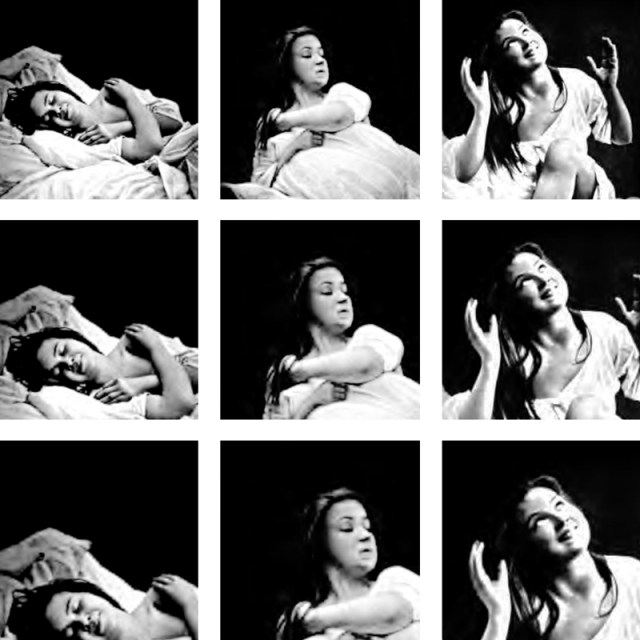
However, Charcot is most noted for his work in hysteria, which stirred much controversy – even he questioned his own work when nearing the end of his life. Charcot specialized in treating patients who were suffering from a variety of unexplained physical symptoms including paralysis, contractures (muscles which contract and cannot be relaxed) and [epileptic] seizures. Some patients sporadically and compulsively adopted a bizarre posture dubbed ‘arc-de-cercle’,  in which the body arched upward until the patient was at times, supported by only their head and heals during an attack.

Photography was an important tool for Charcot, as it allowed for him to document and validate his findings. In the photo below, a female patient’s body is in contortion.
cf674611fcb90208e7214ed1d6ef21cb
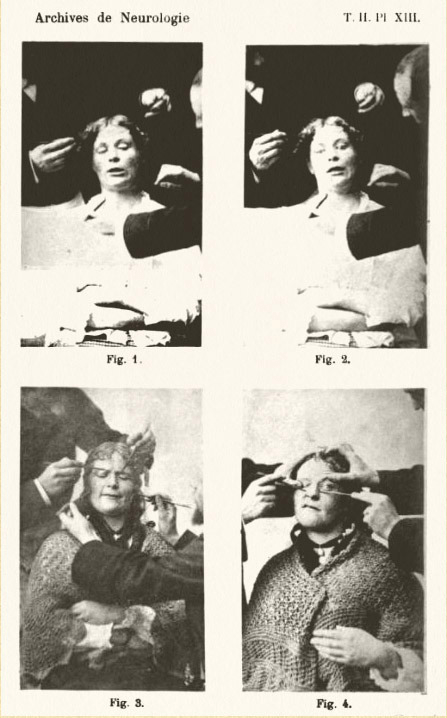
He believed that hysteria was the result of a weak neurological system which was hereditary and could be triggered by a traumatic event such as an accident. To better study hysterics, he learned the technique of hypnosis and soon became a master of the relatively new “science.” Charcot believed that a hypnotized state was very similar to that of hysteria, and so he hypnotized his patients in order to induce and study their symptoms. He would hypnotize patients for groups of students and others, gaining the nickname “the Napoleon of the neuroses.”

Print

Patients in state of hypnosis

Jean-Martin_Charcot_Hysteria_chronophotography_580

untitled

Describing facial muscles, their movements and how they function


charcot-master-mystery-tour-vintage-medical-photography-hysteric

Hyper-excitability Muscle Lethargy – not planking!

– altered by Hystoria


Posted in Medical Arts & Science | Tagged , , , , , , , , , , , , , , , , , , , , , , , , , , , , , , , | Leave a comment

Koteka – The Penis Gourd

pasar-souvenir-hamadi

The koteka, horinm, penis gourd or penis sheath is a phallocrypt or phallocarp traditionally worn by native male inhabitants of some (mainly highland) ethnic groups in New Guinea to cover their genitals. They are normally made from a dried out gourd, Lagenaria siceraria, although other species, such as Nepenthes mirabilis, are also used. They are held in place by a small loop of fiber attached to the base of the koteka and placed around the scrotum. There is a secondary loop placed around the chest or abdomen and attached to the main body of the koteka. Men choose kotekas similar to ones worn by other men in their cultural group. For example, Yali men favour a long, thin koteka, which helps hold up the multiple rattan hoops worn around their waist. Men from Tiom wear a double gourd, held up with a strip of cloth, and use the space between the two gourds for carrying small items such as money and tobacco.

https://www.youtube.com/watch?v=T6D0w4X81lc

Many tribes can be identified by the way they wear their koteka. Some wear them pointed straight out, straight up, at an angle, or in other directions. The diameter of the koteka can also be a clue. Contrary to popular belief, there is little correlation between the size or length of the koteka and the social status of the wearer. Kotekas of different sizes serve different purposes: very short kotekas are worn when working and longer and more elaborate kotekas are worn on festive occasions.

The koteka is  grown using stone weights which are tied to the bottom of the gourd to stretch it out as it grows. Curves can be made in it by the use of string to restrain its growth in whatever direction the grower wishes. They can be quite elaborately shaped in this manner. When harvested, the gourd is emptied and dried. It is sometimes waxed with beeswax or native resins. It can be painted, or have shells, feathers and other decorations attached to it.

It is commonly assumed that there is a sexual display element to wearing the koteka; however, according to the locals, kotekas are worn only to cover themselves.

– altered by Hystoria

Posted in Fashion | Tagged , , , , , , , , , , , , , | Leave a comment

Drop Another Dime Into The Zoltar, Baby!

Fortune Teller mseum_1013

Photo by – D. Nelson

Going to the fortune teller’s was just as good as going to the opera, and the cost scarcely a trifle more – ergo, I will disguise myself and go again, one of these days, when other amusements fail.
– Letter to Orion Clemens, February 6, 1861

Divination has been part of most, if not all cultures around the world since prehistoric man. As humans evolved so did their tools; from the elements (water, fire – used for scrying) and bones to crystal balls, tarot cards,  tea leaves, pendulums and so forth. Some methods do not require tools as the inquirer’s palm or piece of jewelry (a tool provided by the inquirer) is all that is needed for the soothsayer to read one’s past, present and future.

There is the fortune cookie where a mysterious, tiny message is packed inside by a mysterious being you will never meet during your life. Another favorite of many – a coin-operated fortune teller, which were often found at carnivals and midways. Most everyone remembers the movie “Big” with Zoltar, an anthropomorphic machine which granted the wish of Tom Hanks’ character allowing him to become an adult.

I am my own soothsayer as I know what is to come; more cuts, bruises and bumps on the head due to my un-coordination and lack of spatial awareness. If told I am going to fall down a flight of stairs, I will concentrate on not falling, which will more than likely break my confidence as I ascend or descend. This is enough to cause my fall [up or down] a flight of stairs. I suppose this would be similar to the power of suggestion and for me, a waste of $40.00 along with the cost and time of mending a broken coccyx.

Whether you believe in divination, or not, I don’t think it should be taken too seriously, nor do I think it should be snubbed completely – anything is possible. Thanks to a fan of  Zoltar, a replica has been created.


– altered by Hystoria

Posted in Entertainment | Tagged , , , , , , , , , , , , , , , , , , , , , , , , , , , , , , , , , , , , , , , , , , , , , | Leave a comment

Canadian Apple Pie

BonneEnetente_Hystoria Lit_image

Bonne Entente

The advantages of living with two cultures

Strike one at every turn,

Especially when one finds a notice in the office building:

“This elevator will not run on Ascension Day’;

Or reads in the Montreal Star:

“Tomorrow being the Feast of the Immaculate Conception,

There will be no collection of garbage in the city’;

Or sees on the restaurant menu the bilingual dish:

DEEP APPLE PIE
TARTE AUX POMMES PROFONDES

– F.R. Scott  (August 1, 1899 – January 30, 1985)
[1954]

Tarte Aux Pommes Profondes Traditionnelle

Préparation: 35 minutes – Cuisson: 1 hour – Portions: 8

Ingrédients

Pâte à tarte:

  • 2 1/2 tasses (625 ml) de farine tout usage
  • 2 c. à soupe (30 ml) de sucre granulé naturel Lantic
  • 1 c. à thé (5 ml) de sel
  • 1 tasse (250 ml) de beurre non salé froid, coupé en morceaux
  • 1/3 tasse (75 ml) d’eau glacée

Garniture:

  • 8 pommes Granny Smith, pelées et tranchées
  • 1/2 tasse (125 ml) de cassonade brillante Lantic
  • 1/4 tasse (60 ml) de sucre granulé naturel Lantic, divisé
  • 1/4 tasse (60 ml) de fécule de maïs
  • 2 c. à thé (10 ml) de cannelle moulue
  • 1/4 c. à thé (1 ml) de noix de muscade moulue
  • 1/4 c. à thé (1 ml) de sel
  • 1 c. à soupe (15 ml) de beurre froid, coupé en cubes
  • 1 blanc d’œuf
  • 1 c. à soupe (15 ml) d’eau

Étapes

  1. Pâte à tarte : Verser la farine, le sucre et le sel dans un robot de cuisine. Bien mélanger. Ajouter le beurre et mélanger jusqu’à ce que le mélange soit grumeleux. Avec le moteur en marche, verser l’eau glacée lentement jusqu’à ce que la pâte forme une boule. Diviser la pâte en 2 disques et les bien envelopper. Réfrigérer au moins 1 heure et jusqu’à 2 jours.
  2. Garniture : Mélanger les pommes avec la cassonade, 3 c. à soupe (45 ml) de sucre granulé, la fécule de maïs, la cannelle, la muscade et le sel. Incorporer le beurre et mettre de côté. Dans un autre bol, battre le blanc d’œuf avec l’eau. Mettre de côté.
  3. Préchauffer le four à 350 ° F (180 ° C). Mettre la grille à la position la plus basse du four. Etaler un des disques sur une surface légèrement farinée pour tapisser le fond et les côtés d’un moule à tarte profonde de 9 po (23 cm). Verser la garniture dans la croûte à tarte. Badigeonner le bord de la pâte à tarte avec la dorure à l’œuf.
  4. Etaler le disque restant pour former un cercle de 12 pouces (30 cm) et le drapé sur la garniture de pomme. Presser le long du bord pour sceller les deux pièces de pâte en même temps. Avec un couteau à éplucher, couper la pâte le long du bord. Sceller les deux morceaux de la croûte à tarte en pinçant ou avec une fourchette. Badigeonner le dessus avec dorure à l’œuf. Découper deux petits trous d’aération dans le centre de la pie. Saupoudrer avec le sucre granulé restant.
  5. Cuire au four pendant 60 minutes ou jusqu’à ce que la croûte soit dorée et que le jus bouillonne. Transférer la tarte à une grille et laisser refroidir complètement.
  6. Astuce : La tarte sera facile à couper en tranches une fois qu’elle soit complètement refroidie, après environ 4 heures. La tarte peut être servie chaude, mais elle sera plus difficile à couper.(http://www.lantic.ca/fr/recettes/desserts/old-fashioned-deep-dish-apple-pie/23/)
– altered by Hystoria
Posted in Literature | Tagged , , , , , , , , , , , , , | Leave a comment