Forensic Toxicology – With I. Keränen

12647543_10201256958743980_4199800511676878093_n
As a practicing forensic pathologist in a busy office, I am confronted every week with a stack of toxicology reports from my cases. Most are simple to interpret—the multiple GSW with (inconsequential) trace cocaine; the slam-dunk OD with a needle in his arm and sky high 6-MAM from heroin. Then there are the challenges. I might get a case with no apparent anatomic cause of death. I pend it, confident that tox will turn something up. But instead the toxicology report shows only prescription drugs in therapeutic levels, or—worse!—it’s completely negative. Interpreting the laboratory findings, deciding whether to pursue additional testing, and coming to a reasonable conclusion in these cases can be difficult. Though I can always call a toxicologist for advice, ultimately I am the one to make the call on cause and manner of death, and I have to be able to defend my determination in court.So, now that we’ve established the stakes, let’s take a look at five case studies that illustrate the most common errors forensic pathologists make related to toxicology.

Not even doing toxicology:
There’s a dead man in his locked trailer, naked in bed, no drug paraphernalia at the scene and no signs of foul play. The local coroner finds out the decedent’s medical history included an untreated dental abscess, and signs the death certificate without performing an autopsy. When the dentist gets sued, what is the first thing the forensic consultant on that case asks for? Toxicology. Luckily, the coroner’s investigator collected enough blood and vitreous humor to perform toxicological analysis—and it shows a sky-high methamphetamine level. This finding dovetails with his dental pathology (“meth mouth” is a known complication of chronic amphetamine abuse), and helps the dentist’s lawyers defend him in the lawsuit. The lesson? Just because there are no drugs at a death scene doesn’t mean you shouldn’t perform an autopsy to collect specimens for toxicology, especially if the decedent has a history of chronic abuse.

A young schizophrenic woman has a psychotic break, and her roommate calls the cops. Responding officers find her ranting, and brandishing a screwdriver. She comes at one of them, and he shoots her to death. The gunshot wounds makes for a clear enough cause of death, but on the toxicology form, the forensic pathologist neglects to inform the toxicologist about the decedent’s prescribed medications. When the tox screen comes back negative, the pathologist then writes in his report that the decedent hadn’t been taking her medication at the time of her death. He never calls the lab to confirm this assumption—but, weeks later, a local newspaper reporter does. When the tox lab then runs the tests for the prescribed antipsychotics, it turns out the result is positive. The pathologist’s reputation is damaged. Always remember that routine enzyme-based screens will not pick up all drugs. It pays to double check that the lab tested for any specific medications the decedent was supposed to be taking, especially in a high-profile case.

Or..

One hot summer evening, a guard outside a chronic pain clinic finds the decomposing body of a middle-aged woman in her parked car. She has the keys and her purse still clutched in her hands. She had been seen at the clinic that morning, hours before. The autopsy pathologist finds high levels of multiple opioid analgesics, and determines that the death was an overdose. The family sues the pain clinic and the drug manufacturer. During document discovery the dead woman’s medical records reveal a past diagnosis of cardiac arrhythmia. The drug levels? They were already high because the decedent was a chronic, tolerant user, appropriately prescribed; but they were also spuriously elevated due to post-mortem redistribution, the passive diffusion of drugs in a decomposing body that can cause higher detected levels than when the person was alive. Why did the pathologist ignore the woman’s heart disease and blame the drugs? Because the opioid levels were high. You cannot focus solely on the numbers—you have to look at the whole case. In this one, the facts of the case pointed to a sudden cardiac arrest, and not to a slow death by respiratory depression as in an opioid overdose.

OR.

An elderly woman is declared dead in the emergency room. Her husband says that she was snoring all night. He called ambulance in the morning, when she wouldn’t wake up. On autopsy the pathologist finds a diseased heart, and signs out the case as a death by natural disease. Then, while preparing the house for the funeral, the husband finds the woman’s recently-prescribed but empty medication bottles, and brings them to the coroner’s office. In the toxicology report, the woman’s drug levels appeared high but within therapeutic range, so the pathologist hadn’t considered poisoning as a cause of death. The distended bladder he pulled out of her body on autopsy should have steered him to take a closer look at the tox, however. Sleeping patients who are not intoxicated will wake up and go to the bathroom. A bladder with 400 or 500 ml of urine in it may be a signal that something is causing central nervous system depression. Turns out this was a suicidal overdose of prescription medication. The decedent was not just asleep in bed—she was in a coma, and had been metabolizing the drugs for hours while unconscious. When a patient dies in the hospital, death investigators might not go to the primary scene to collect evidence—such as, in this case, the medications. If the decedent’s husband had not alerted the coroner, her death would have been miss-classified as natural.

A negative toxicology report does not mean the death is not drug-related
A psychotic prisoner is booked into jail, and the medical staff there change his usual anti-psychotic medication to a different one that they have in their dispensary. He develops a high fever with altered mental status, and goes to the hospital, where that medication is discontinued. He dies a week later, with pneumonia and kidney failure from muscle breakdown. The hospital blood specimens come up negative for all drugs, so the pathologist consults a forensic toxicologist.
The toxicologist reviews the medical records and concludes that the change in prescribed medications at the jail had likely triggered a fatal drug reaction. Post-mortem drug tests can come up negative for many reasons, and drug-drug interactions and adverse reactions can lead to death days or even weeks after they occur. Sometimes a toxicologic cause of death may not be apparent without a thorough review of the medical record and consultation with a forensic toxicologist. – I. Keränen
– altered by Hystoria
Posted in Medical Arts & Science | Tagged , , , , , , , , , , | Leave a comment

Our Fancy – Red Skelton & Vincent Price in “Freddie’s Masterpiece”

Brought to you by Pet Evaporated Milk. First food for babies, first choice of good cooks! And Pet-Ritz frozen pies! Imagine… apple pie like this every time. Yes. Every time!

https://www.youtube.com/watch?v=TwmliucOagU


-altered by Hystoria

Posted in Cooking Magic, Entertainment, Our Fancies | Tagged , , , , , , , , , , , , , , , , | Leave a comment

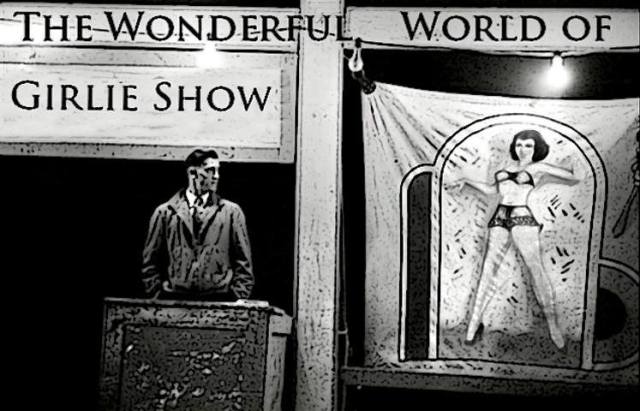
The Wonderful World of Girly Shows


10404131_1204729616221184_6072519687214484679_n

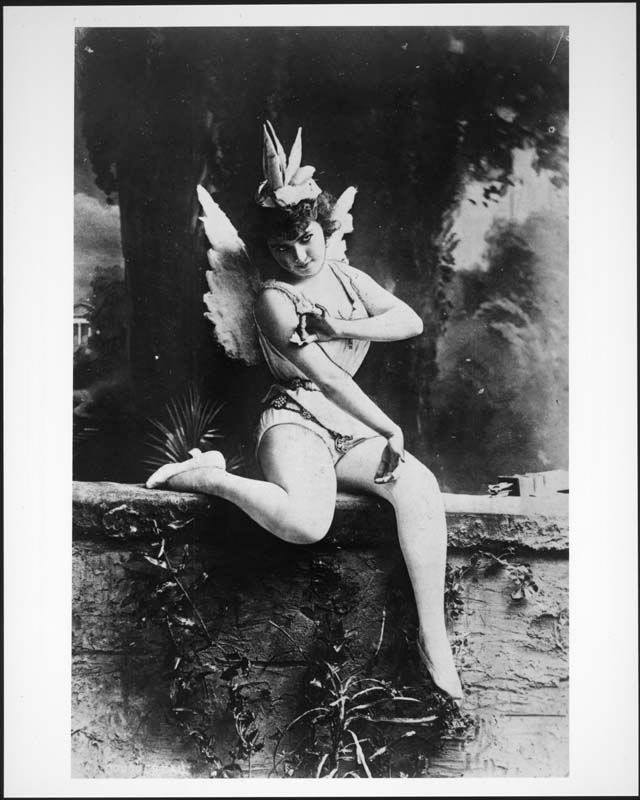
When word the circus was coming to town spread, people of all ages became anxious knowing  wolf-faced boys and  a 3-legged lady would be making an appearance. Wives would become agitated knowing their husbands were smitten with the idea of visiting the brightly lit “Dames! Dames! Dames!” sideshow tents for the beauty pageant, burlesque show, or perhaps a little more peep than the wives needed to know!

3696_1204619646232181_612006964650138805_n

Dames came in all shapes and sizes


1918478_1204729729554506_1234776887096243406_n

Some peepshows were very elaborate and were theme-based


1964898_1204619779565501_3183160459770594912_n

A little more on the innocent side of cosplay – we just enjoyed this photo


10325344_1204619566232189_7046434749436167155_n

Some peepshows could be mistaken for traveling brothels


11249920_1204729726221173_5183680963336380425_o

Others more like a Cat Club or ‘strip club’


12525499_1226087647418714_8570177939488989694_o

A Cuddle Dancer is equal to or the same as a Taxi Dancer


– altered by Hystoria


Posted in Adults, Entertainment, Taboos | Tagged , , , , , , , , , , , , , , , , , , , , , | Leave a comment

Documentary – Guys & Dolls: Men Who Prefer Life-like Dolls Over Real-life Women

In the 2008 movie “Lars and the Real Girl” Ryan Gosling plays a man who introduces a life sized doll as his girlfriend and takes her everywhere, eventually gaining the town’s acceptance.

A year before that movie put so-called “real dolls” on the periphery, the BBC produced a documentary called “Guys and Dolls.” It chronicles the industry and the men who buy and chose to live with them instead of warm, breathing, functioning, human females.

A California company Realdoll, began making realistic, life-sized dolls back in 1996. Since then, they’ve sold thousands of the life-like ladies for upwards of $10,000 each with requests for customization.

The men interviewed in the documentary speak about how the dolls influence their lives. While they sometimes feel isolated from real life, they say the companionship they feel with the dolls is worth it.

– altered by Hystoria

Posted in Adults, Documentaries, Inventions | Tagged , , , , , , | Leave a comment

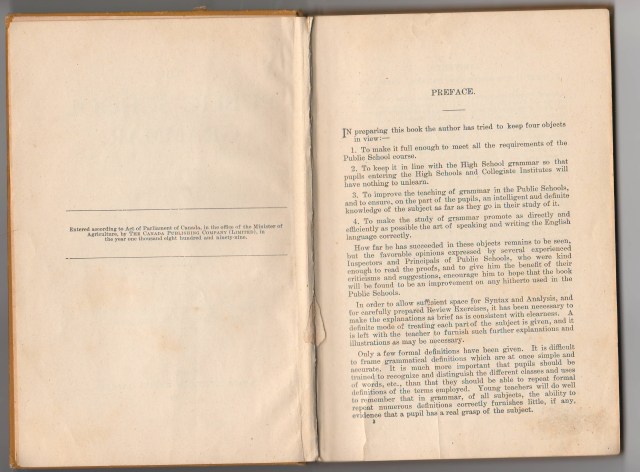
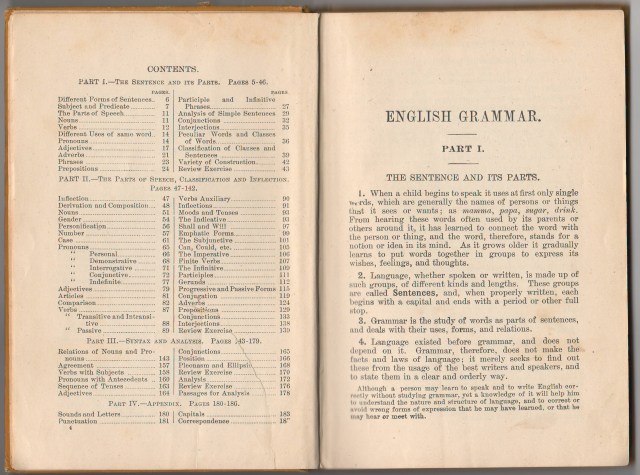
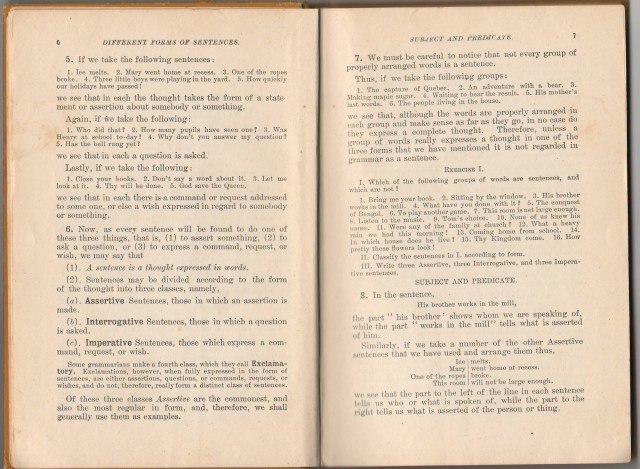
Public School Grammar – Canada Publishing Company (Limited) 1899


The Public School Grammar textbook issued in the Province of Ontario in the City of Toronto by H. L. Strang, B.A., Principal Goderich Collegiate Institute and published by Canada Publishing Company (Limited) 1899 – front cover to Page 7 with the rest to follow.

1PSG_FrontCover

Public School Grammar textbook – embossing reads ‘Price 25 Cents’ 


2PSG_IntroPage

By H. I. Strang, B. A., Principal Goderich Collegiate Institute


3PSG_Preface

Preface


4PSG_Contents_Prt1

Contents – English Grammar Part 1. (Pg. 4 – 5)

5PSG_Pg 6 - 7

English Grammar Part 1. (Pg. 6 – 7)

All images are property of Hystoria.ca ©


– altered by Hystoria

Posted in Linguistics | Tagged , , , , , , , , , , , , , , , , , , , , , , , , , , , , , , , , , , , , , , , , , , | Leave a comment

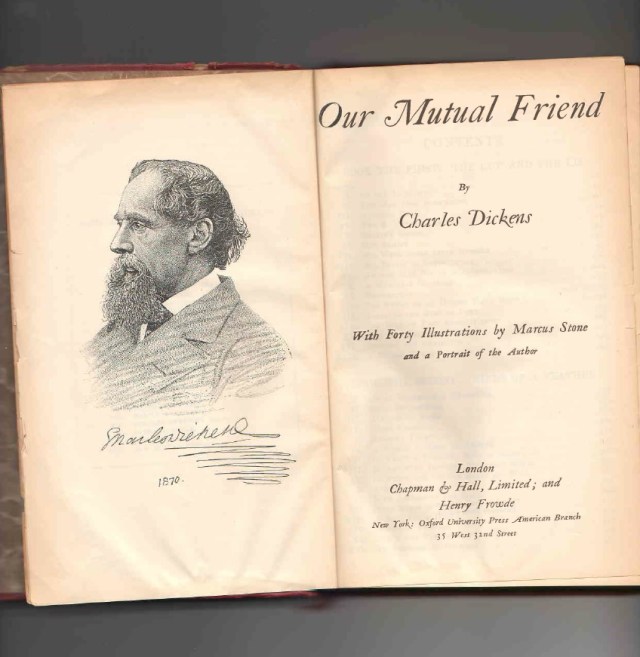
The Oxford India Paper Dickens “Our Mutual Friend” – 1920

From Hystoria’s personal library, we present to you, the first pages of the last of 17 Volumes of the Oxford India Paper Dickens, Complete Works  “Our Mutual Friend” – 1920 Edition.

Dickens_OurMutualFriend_1920EditionJPG

Illustrations by Cruikshank, ‘Phiz,’ &c.


– altered by Hystora

Posted in Literature, Wartime | Tagged , , , , , | Leave a comment

Cocaine & The Process of Human Decomposition

The time taken for a body to decompose can vary greatly due to a wide range of factors that can affect the process. Perhaps the most significant factor in the rate of decomposition is temperature and environment. Warmer temperatures will accelerate the process of decomposition whereas colder temperatures will slow the process down and, if cold enough, stop it altogether. The temperature will equally affect insect succession, which will ultimately affect how quickly the body is broken down.

Environmental conditions will equally affect the species of insect present in the area, in turn having an effect on the state of the corpse depending on the species colonizing the remains. A dry and windy environment can dehydrate a cadaver, resulting in mummification. The amount of protection a body has will also play a role in the rate of decomposition. For instance, a body swaddled in blankets or buried under a few feet of soil will be significantly less exposed than a naked, unburied cadaver exposed to the elements. A protected body may also limit insect activity, resulting in a slower rate of decomposition if insects cannot easily access the corpse, in addition to retaining body heat.

If a body is left submerged in water the rate of decomposition will typically be much slower due to the low temperatures and levels of oxygen, unless the corpse is able to float to the surface where insect colonization can occur. When a dead body is left exposed, it will inevitably attract scavengers which may have an effect on the apparent rate of decomposition. Although insect colonization on remains is reasonably well understood and estimations on time since death can be made by studying these, the cause of death can affect insect succession and in turn the state of decomposition. For instance, a corpse with gaping open wounds may introduce insects into areas of the body sooner than typically expected, resulting in the body appearing to be more decomposed.

If a body was burned the skin and tissue may be charred and dried out, rendering it unsuitable for microbial growth and certain insect colonization. However conversely fire could cause injuries which ultimately expose the body further, accelerating the decomposition process. Though not a common factor that must be taken into account, certain drugs in the body of the deceased have been known to affect decomposition in terms of insect activity. For example, the presence of cocaine has been shown to speed up development of insects, thus having an effect on the state of the corpse.

Prior to death: cocaine can exert a variety of effects. The major acute effects producing pathological conditions resulting in increased circulating catecholamine levels. Increased catecholamines can produce vasoconstriction. The lesions can include acute hemorrhages and infarction in the brain. Ischemic changes in the heart from small artery narrowing and sclerosis lead to contraction band necrosis of the myocardium and possible sudden death. Combining cocaine use with ethanol use can compound the myocardial damage.

– I. Keränen


– altered by Hystoria

Posted in Death & Culture, Medical Arts & Science | Tagged , , , , , , , , , , , | Leave a comment

Great Granny’s Cook Book & Modern Full-colour Printing

The first page of Great Granny’s 1947 copy of The American Woman’s Cook Book illustrates the beginning of modern full-colour printing, modern photoengraving and also speaks of the practice of food irradiation. However,  the photos of the delightful, tantalizing Color PLATES weren’t printed in colour.

AmWomanCookBook_The Color Plates

The American Woman’s Cook Book – published by Culinary Arts Institute, Chicago – 1947

– altered by Hystoria


Posted in Cooking Magic, Technology, Wartime | Tagged , , , , , , | Leave a comment

Vagina Fragrance Beads – Womb Detox

Potpourri is not meant for the vagina and, in fact, can cause adverse effects. If you want to detox your womb, do so by ingesting green tea which is used by many to detox the whole body – not just your reproductive parts. There are plenty of other foods that can help you to detox.

If you are experiencing bad odors from your vagina, perhaps your best bet is to make an appointment with your Family Practitioner, whom can then refer you to a Gynecologist where your vag can be properly treated. It will be explained to you that  foreign objects do not belong in the vag – not even a douche.

Would you trust a maker who uses language such as “a whole whack” and then suggests you stuff 3 sacks of beads into your sensitive area? How awful it would be to have an allergic reaction where you can’t reach the itch! You could give both EOS lip balm and the herbal womb detox a try together and see if you can’t make both sets of lips match!

It promises to “cleanse the womb and return it to a balance [sic] state” with dime-sized pearls that apparently smell like flowers.

One of the claims is that your vagina will carry that nice floral smell, which will disappear shortly after you take the herbs out.

The makers recommend you insert three pearls into your vagina, and keep them there for a minimum of three days.

They’re meant to fix a whole whack of “major imbalances” down there, like foul odour, yeast infections, endometriosis, bacteria vaginosis and fibroids. – Global News

NOTE: Little fish aren’t on this planet to nibble away the dead skin from human feet during a pedicure, either. Fads, eh!

-altered by Hystoria


Posted in Adults, Inventions | Tagged , , , , , , , , | Leave a comment

Our Fancy – The Arrival of a Train at La Ciotat Station – 1896


One short film had a particularly lasting impact; yes, it caused fear, terror, even panic. It was the film L’Arrivée d’un train en gare de la Ciotat (Arrival of the Train at La Ciotat Station). Although the cinematographic train was dashing toward the crowded audience in flickering black and white (not in natural colors and natural dimensions), and although the only sound accompanying it was the monotonous clatter of the projector’s sprockets engaging into the film’s perforation, the spectators felt physically threatened and panicked.

– Hellmuth Karasek

– altered by Hystoria

Posted in Documentaries, Our Fancies | Tagged , , , , , , , , , , , , | Leave a comment